Setting the correct system timezone on your Linux or Windows VPS is essential for ensuring accurate cron job execution, synchronized database timestamps, correct log file analysis, and scheduled backup routines. When a server’s clock drifts or remains on default UTC, automated scheduled tasks run at unexpected hours and audit trails become difficult to correlate.
This guide walks you through changing and verifying the system timezone across all modern Linux distributions (Ubuntu, Debian, CentOS, AlmaLinux, Rocky Linux) using modern timedatectl systemd commands, interactive menus, and traditional symlinks.
Why server timezone synchronization matters
- Automated Cron Jobs: Scheduled tasks (database maintenance, billing renewals, email digests) trigger based on local system time.
- Log File Correlation: Aligning web server (Nginx/Apache), authentication, and database logs with your actual operating hours simplifies troubleshooting.
- SSL/TLS Certificate Validity: Extreme time skew can cause SSL handshake verification failures.
- Application Timestamps: Ensures customer transactions and database records reflect accurate creation times.
Method 1: Change timezone using timedatectl (Modern Systemd – Recommended)
All modern Linux distributions powered by systemd (Ubuntu 18.04–24.04, Debian 10–12, AlmaLinux/Rocky 8–9, CentOS 7–9) use timedatectl for instant timezone management with zero service restarts.
Step 1: Check current time and timezone
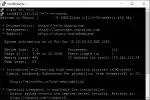
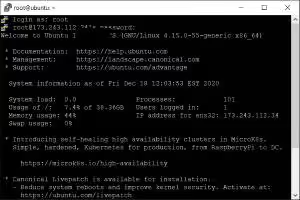
Log in to your VPS via SSH as root (or a sudo user) and run:
timedatectlThis displays your Local time, Universal time (UTC), RTC time, active Timezone (e.g. Time zone: Etc/UTC), and NTP synchronization status.
Step 2: List and search available timezones
Filter the official IANA timezone database to locate your target region:
# Search for European timezones
timedatectl list-timezones | grep -i Europe

# Search for American timezones
timedatectl list-timezones | grep -i America

# Search for specific cities (e.g. London, New York, Berlin, Istanbul)
timedatectl list-timezones | grep -i "New_York\|Berlin\|London\|Istanbul"
Step 3: Set your new timezone
Execute the set-timezone command with your selected IANA region identifier:
# Example: Set to US Eastern Time (New York)
sudo timedatectl set-timezone America/New_York

# Example: Set to Central European Time (Berlin/Frankfurt)
sudo timedatectl set-timezone Europe/Berlin

# Example: Set to UK Time (London)
sudo timedatectl set-timezone Europe/London
The change takes effect immediately across all system processes.
Method 2: Change timezone interactively (Debian and Ubuntu)
If you prefer a visual terminal menu on Debian or Ubuntu:
- Run the tzdata reconfiguration utility:
sudo dpkg-reconfigure tzdata - Use the arrow keys to select your geographic area (e.g. America, Europe, Asia) and press Enter.
- Select your specific city or region from the second menu and hit Enter.
Method 3: Manual symlink fallback (All Linux distributions)
If you run a minimal container environment without systemd, update the /etc/localtime symlink manually:
- Remove the existing localtime symlink:
sudo rm -f /etc/localtime - Create a new symbolic link pointing to your desired timezone zoneinfo file:
sudo ln -s /usr/share/zoneinfo/America/New_York /etc/localtime
How to verify and enable automatic NTP time synchronization
To prevent your server’s clock from drifting over time, enable Network Time Protocol (NTP) synchronization:
# Enable automatic NTP sync via systemd-timesyncd
sudo timedatectl set-ntp on

# Verify that NTP service is active:
timedatectl status | grep "NTP service"
Check the updated server time using the standard date command:
dateUpdating timezone on Windows VPS and RDP
If you are managing a Windows VPS or Windows RDP server instead of Linux:
- Via PowerShell (Admin):
Set-TimeZone -Id "Eastern Standard Time" # View all Windows timezone IDs: Get-TimeZone -ListAvailable - Via Windows GUI: Right-click the clock in the bottom-right taskbar > Select Adjust date/time > Choose your preferred timezone from the dropdown.
For high-performance, developer-ready virtual cloud servers with automated management tools, explore Aminserve Linux and Windows VPS hosting with 1Gbps ports and 24/7 dedicated support.