Want to use your microphone and webcam inside a Windows VPS? It works — every modern Windows VPS lets you redirect audio, microphone and camera through the Remote Desktop session. This guide follows the exact steps you need, from the connection settings on your computer to the last click inside the server.
What you need before you start
- A Windows VPS or RDP service (Windows Server 2016, 2019, 2022, or Windows 10/11).
- Microsoft Remote Desktop Connection on Windows, or the Remote Desktop app on Mac/iOS/Android.
- A working microphone and webcam on the computer you connect from.
You will need administrator access on the VPS for two of the five steps. Most AMinServe Windows plans include it.
Part 1: Turn on device redirection in the RDP client
Start by opening Remote Desktop Connection from the Start menu on your computer.
1. Open the Local Resources tab.
2. Under Remote audio recording, click Settings.
3. Make sure Record from this computer is selected.
4. Go back, then click More.
5. From the list, activate Video capture devices and Other supported Plug and Play devices.
6. Click Connect, enter your password, and continue.
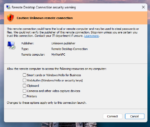
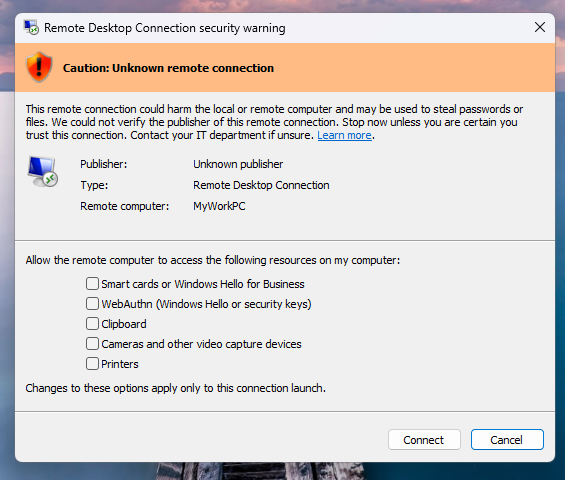
If a warning pops up asking “Do you want to connect anyway?”, click OK. This happens when the server certificate is self-signed — it is normal for VPS providers.
Part 2: Install the Remote Desktop roles on the VPS
On modern Windows Server, the redirection features need the Remote Desktop Services roles installed. After you connect, the Server Manager opens on the VPS.
1. Click Add roles and features.
2. Click Next until you reach Installation Type.
3. Keep Role-based or feature-based installation selected.
4. In the Roles section, tick Remote Desktop Services.
5. In Role Services, check and add: Remote Desktop Connection Broker, Remote Desktop Gateway, Remote Desktop Licensing, and Remote Desktop Session Host.
6. Click Next, enable Restart the destination server automatically if required.
7. Confirm with Yes, then click Install.
The installation takes a few minutes and may restart the server once. Wait for it to finish before the next step.
Part 3: Configure the Group Policy settings
Now open the Local Group Policy Editor on the VPS: press Win+R, type gpedit.msc, and press Enter.
Navigate to:
Computer Configuration → Administrative Templates → Windows Components → Remote Desktop Services → Remote Desktop Session Host → Device and Resource Redirection
Change these four settings:
- Do not allow video capture redirection → Disabled
- Allow audio and video playback redirection → Enabled
- Allow audio recording redirection → Enabled
- Do not allow supported Plug and Play device redirection → Disabled
Part 4: Enable RemoteFX USB redirection
In the same Group Policy editor, go to:
Computer Configuration → Administrative Templates → Windows Components → Remote Desktop Services → Remote Desktop Session Host → Device and Resource Redirection → RemoteFX USB Device Redirection
Set Allow RDP redirection of other supported RemoteFX USB devices to Enabled.
This setting lets extra USB devices — webcams, headsets, card readers — pass into the remote session, not just the generic camera class.
Part 5: Restart and verify the devices
Close the Group Policy editor and restart the VPS. Once it is back online:
1. Reconnect with Remote Desktop.
2. Open Device Manager on the VPS (devmgmt.msc).
3. Look for Remote Desktop Camera Device.
4. Your local webcam should now appear, for example as USB2.0 PC CAMERA (redirected).
When you see that listing, both your microphone and webcam are working inside the VPS. Open your favorite conferencing app and test them — apps like Zoom, Teams or Discord will list your local mic and camera as if they were connected directly to the server.
Troubleshooting
- Camera not listed in Device Manager: reconnect the RDP session — devices enumerate at connection time, not mid-session.
- Audio still silent: check the sound icon in the VPS taskbar; make sure output is not routed to “Play on remote computer”.
- Mic not detected in apps: confirm in the RDP client that Record from this computer is selected, then reconnect.
- gpedit.msc not found: you need Windows Server or Windows 10/11 Pro. Home editions skip Group Policy; the client-side settings in Part 1 are enough there.
- Warning about certificate: normal for VPS providers, click OK and continue.
Audio, mic and camera on Mac and mobile
The Microsoft Remote Desktop app for macOS, iOS and Android has the same redirection options. In the app settings, look for Devices and turn on Redirect audio, Redirect microphone, and Redirect camera. Then reconnect to the VPS.
Still stuck?
Open a support ticket and tell us your Windows version and what you connect from (Windows, Mac or mobile). A screenshot of your RDP client’s Local Resources tab helps us pinpoint the issue fastest.