Applies to: All Windows
Whether you just received a new RDP or VPS server, want to replace the default password with something stronger, or need to temporarily share access with support — changing your Windows password takes under a minute. This guide covers three methods: Command Prompt (works on all versions), the Windows Settings UI, and PowerShell.
ℹ️ You do not need to know the current password to use the Command Prompt method below — which makes it the most reliable option for server administrators.
Method 1: Command Prompt (Recommended — Works on All Windows Versions)
This is the fastest and most universal method. It works on every Windows version from Server 2008 through Server 2022 and Windows 11.
1 Open the Start menu by clicking it or pressing Ctrl + Esc.
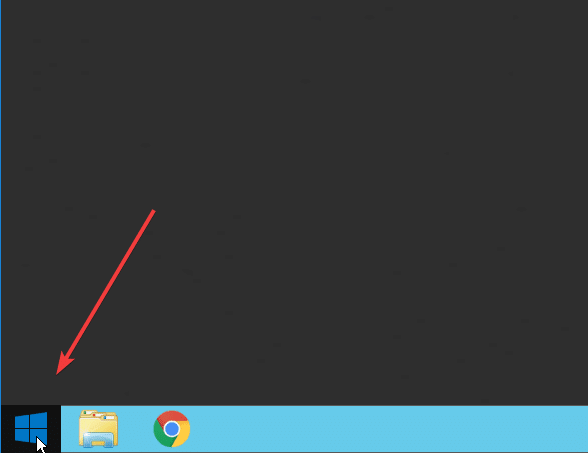
2 Type CMD — the search box will appear automatically as you type.

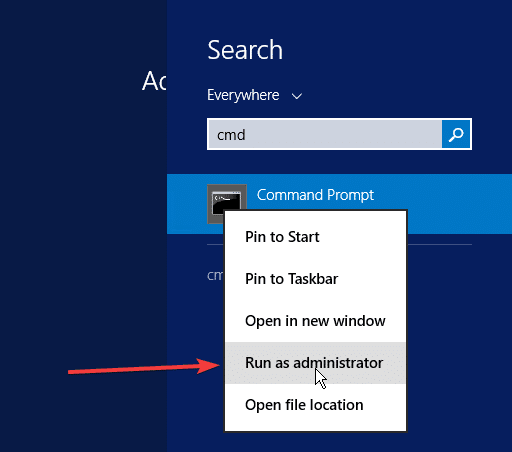
3 Right-click Command Prompt in the results and choose Run as administrator. Administrator privileges are required — the command will fail with “Access is denied” otherwise.
4 Run the password change command. Replace administrator with the username you want to change, and replace YourNewPassword with your chosen password:
net user administrator "YourNewPassword"
To change a different user’s password, replace administrator with their username:
net user john "YourNewPassword"
To see all user accounts on the machine:
net user
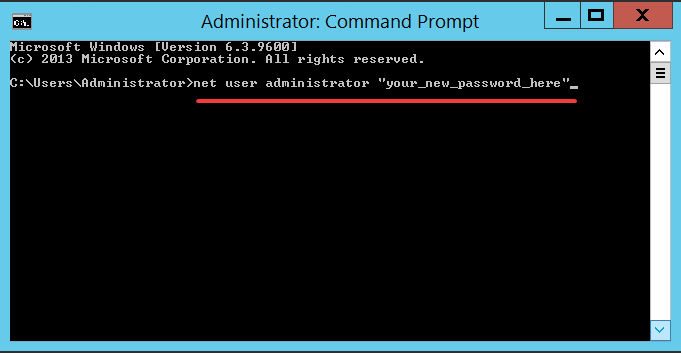
5 Confirm success. If the command worked you will see: The command completed successfully.

🚫 Critical: test before closing your current session. Before disconnecting, open a second RDP connection and log in with the new password to confirm it works. If you close your current session first and the password is wrong, you will be locked out and may need to reinstall the OS from your control panel.
Method 2: Windows Settings (Windows 10 and 11 Only)
This method uses the graphical interface and requires you to know the current password.
- Press Win + I to open Settings
- Go to Accounts → Sign-in options
- Under the Password section, click Change
- Enter your current password, then your new password twice
- Click Finish
ℹ️ RDP users: You cannot use
Ctrl + Alt + Delinside an RDP session the normal way — it sends the shortcut to your local machine instead. UseCtrl + Alt + Endinside the RDP window to open the Windows Security screen, then choose Change a password.
Method 3: PowerShell
Useful for scripting or managing multiple accounts. Run PowerShell as administrator and use:
Set-LocalUser -Name "administrator" -Password (ConvertTo-SecureString "YourNewPassword" -AsPlainText -Force)
Replace administrator and YourNewPassword with your values. No confirmation prompt is shown — the command runs silently and takes effect immediately.
Password Requirements and Security Tips
Windows Server enforces a password complexity policy by default. Your new password must:
- Be at least 8 characters long (12+ strongly recommended for servers)
- Contain characters from at least three of these four categories: uppercase letters, lowercase letters, numbers, special characters (
! @ # $ % ^ & *) - Not contain your username or parts of your display name
⚠️ RDP servers are a constant target for brute-force attacks. A weak password like
Admin123can be cracked within hours. Use a randomly generated password of at least 16 characters — for example:8871s45bh82x2%%l9ps. A password manager can generate and store this for you.
Troubleshooting
| Problem | Likely cause | Fix |
|---|---|---|
| “Access is denied” | CMD not running as administrator | Right-click CMD → Run as administrator |
| “The password does not meet complexity requirements” | Password too simple or too short | Use a mix of uppercase, lowercase, numbers and symbols, minimum 8 characters |
| Locked out after changing password | Typo in new password, not tested before closing session | Use your hosting control panel (e.g. Virtualizor, Proxmox) to reset the OS or use VNC console access |
Ctrl + Alt + Del not working inside RDP | Shortcut goes to local machine, not the remote session | Use Ctrl + Alt + End inside the RDP window instead |
| “The user name could not be found” | Username spelled incorrectly | Run net user to list all accounts and verify the exact username |